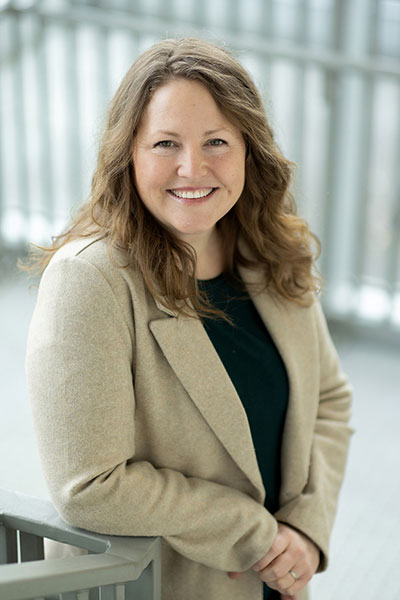
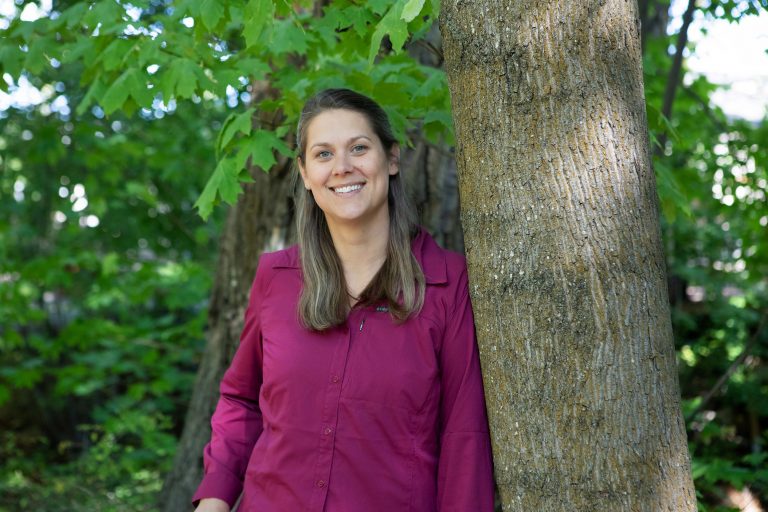
Marni Turek

Watershed Management Research Extension Facilitator, Career and Personal Education Program Coordinator

Email: marni.turek@ubc.ca


Biography

Marni has 20 years of experience working on a wide range of sustainability related initiatives in multiple sectors, including local government, not-for-profit, junior mineral exploration, collaborative watershed-based organizations and academia. Catalyzing opportunities to bring people together across disciplines and sectors to create value-added partnerships and progress towards achieving shared goals has been at the core of Marni’s work. As Watershed Management Research Extension Facilitator, she works to create programs to increase knowledge sharing opportunities and engage with the community on water and watershed related topics.

Responsibilities

The Watershed Management Research Extension Facilitator works closely with the Research Chairs in Watershed Management to develop and deliver programs that advance important research, foster connections between research and industry, engage with community partners and enrich student learning. For more information, please visit: https://watersheds.ok.ubc.ca


The Watershed Ecosystems Project team is excited to announce the release of our Community Report, a collaborative and accessible summary of our work to date in the sqʷʔa (Peachland Creek) Watershed.

This report highlights key findings, shared learning, and the evolving relationships among researchers and community partners as we’ve worked together towards holistic understandings of the sqʷʔa (Peachland Creek) community watershed. It serves as both a reflection of activities to date and a foundation for future dialogue, co-design, and impact.

We are excited to hear your thoughts! We invite all partners and community members to explore the findings and continue the conversation. 

Download the report here: WEP Community Report October 28 2025


Comments or Questions? Please reach out to Marni Turek at marni.turek@ubc.ca.


WEP research takes the global stage, with invited talks highlighting how forest disturbance and climate pressures are reshaping watershed hydrology


Watershed Ecosystems Project researchers Dr. Adam Wei and Dr. Sheena Spencer were invited speakers at the 6th International Union of Forest Research Organizations (IUFRO) International Conference on Forests and Water in a Changing Environment, held in Beijing this past October. The global gathering brought together leading scientists and practitioners to advance understanding of the forests–water–climate nexus and its implications for watershed resilience.

Dr. Wei’s presentation, Global Forests and Water: Variation and Predictability, provided a systematic review of more than a century of global forests-and-water research. Dr. Wei’s synthesis highlighted the wide variability in hydrological responses to forest disturbance and reforestation, demonstrating how local climate, vegetation, and watershed characteristics interact to shape water outcomes. The work underscores the importance of place-based analysis and locally customized forest and watershed management strategies in an era of accelerating climate and disturbance pressures.

Dr. Spencer presented Long-term Trends in Summer Low Flows Following Logging and Forest Regrowth, co-authored by Dr.Rita D. Winkler, drawing on long-term findings from the Upper Penticton Creek Watershed Experiment in British Columbia. Her analysis showed post-harvest shifts in streamflow timing, with elevated spring flows and declining late-summer low flows persisting as forests regenerate—raising important considerations for water allocation, fish habitat, and treatment capacity for downstream drinking water systems. In addition to her research presentation, Dr. Spencer served as a panelist in the Global Dialogue session on the forests-water-climate nexus, contributing Canadian perspectives on sustainable forest management, science-to-practice integration, and resilient livelihoods.

To learn more about the 6th IUFRO International Conference on Forests and Water in a Changing Environment, visit the conference website here.

From 20-23 October 2025, the 6th IUFRO International Conference on Forests and Water in a Changing Environment (FWCE) was successfully held at Beijing Forestry University. This conference was organized by the IUFRO Task Force Forest-Water-Livelihood-Governance Nexus and IUFRO Working Party 8.01.04 Hydrological Processes and Water Quality and co-hosted by Beijing Forestry University and the Chinese Academy of Forestry. It attracted approximately 130 scientists, policymakers, and practitioners from 22 countries – IUFRO 2026

Assessing impacts of forest disturbance on hydrological processes in Peachland Creek Community Watershed using geochemical approaches


Congratulations to Mackenzie Myers for successfully defending his thesis, “Assessing impacts of forest disturbance on hydrological processes in Peachland Creek Community Watershed using geochemical approaches” in September 2025.

Understanding how forest disturbance affects watershed hydrology is essential for protecting water supply and reducing environmental risk in forested community watersheds.

Mackenzie’s research examined how forest disturbance impacts water movement in the Peachland Creek Community Watershed:

  1. What are the impacts of forest disturbance on hydrological processes in Peachland Creek Watershed?
  2. How do hydrological characteristics vary between sub-watersheds, and what factors contribute to these differences?

By analyzing stream water for chemical tracers including ions, stable water isotopes, and organic colour (a proxy for organic material), the influence of forest disturbance on water pathways, mean transit time, and young water fraction was investigated.

Results show that increased forest disturbance leads to a greater contribution of snowmelt, meaning water flows through shallower pathways. These findings highlight that forest disturbance can significantly affect water movement and consequently watershed hydrology.

Please see Mackenzie’s full thesis here


Dr. Sheena Spencer has been elected as the new chair of the Okanagan Basin Water Board Water Stewardship Council. Dr. Spencer is a Research Hydrologist with the Ministry of Forests, an adjunct professor at UBC Okanagan, and a member of the Watershed Ecosystems Project.

Known for her dedication to watershed research and community collaboration, Sheena brings broad expertise to her leadership role. As Chair, Dr. Spencer hopes to promote collaboration and partnerships, advocate for healthy watersheds in the face of climate change and other impacts, and integrate Indigenous knowledge into Water Stewardship Council initiatives.


Additional Information:

Dr. Spencer  conducts research on the hydrologic response to forest disturbance/regrowth and runoff generation processes in headwater catchments. She the research lead for the Upper Penticton Creek Watershed Experiment, a long-term forest hydrology research site.

Research Publications


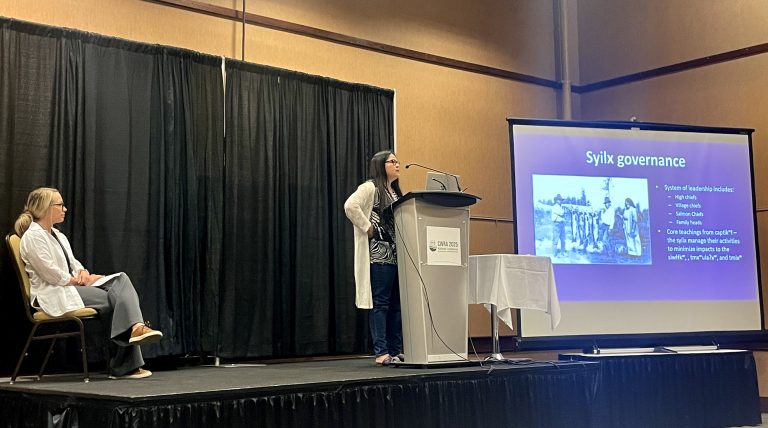
On Tuesday, May 27th, Watershed Ecosystems Project (WEP) members Rheanne Kroschinsky and Dawn Machin presented at the Canadian Water Resources Association National Conference held in Penticton, British Columbia on the unceded, traditional and ancestral territory of the Syilx Okanagan peoples.

The conference drew nationwide participation from various levels of government – First Nations, local, regional, provincial, and federal; non-governmental organizations; industry; and academia. The theme of the 2025 conference was, “Living Between Waters – Connecting Water & Resilience”, with programming emphasizing the importance of partnership development, multi-level and inter-agency coordination, Indigenous stewardship and decision-making, and the creation of a resilient vision for a shared water future.

In their presentation, graduate students Rheanne Kroschinsky and Dawn Machin shared their collaborative learnings over the past four years of partnership and project development, with a focus on the need for inclusion and recognition of Syilx water law, policy, processes, and authority in decision-making for the sqʷʔa (Peachland Creek) community watershed.  This presentation illustrated the WEP’s community-engaged, interdisciplinary approach to governance development in Peachland, allowing time for critical relationship development and equitable collaborative design.

Rheanne guided the audience through the background of the WEP’s Governance activity design and objectives, the challenges identified and potential pathways for more sustainable and inclusive decision-making in Peachland. Dawn then offered insights into Syilx frameworks for water governance, the impact on water relationships as a result of colonization, and persevering Syilx assertion of rights and title through contemporary water relationships and impactful Syilx-led processes (such as Okanagan salmon restoration).

Both presenters highlighted the importance of relationships rooted in trust, transparency, and reciprocity, as being central to water governance processes – emphasizing the critical need for allowing ample time for these to develop, with equal contributions from all partners from the onset. They also highlighted the importance of identifying shared priorities for watersheds – common ground on which to establish partnership and co-create a shared watershed vision.

Related Article:

Watershed Ecosystems Project co-hosts gathering on the intersections between climate change and water

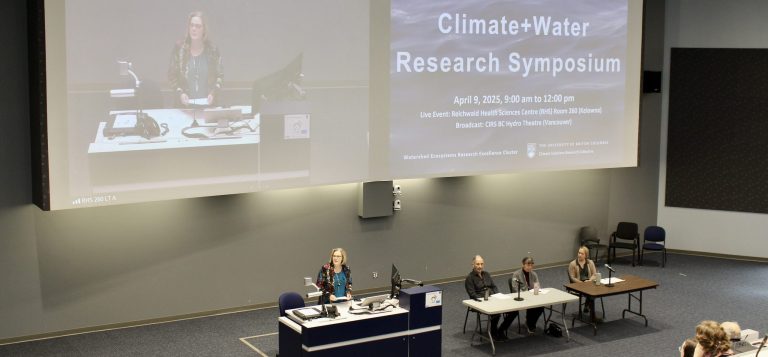
On April 9-10, 2025, researchers from across disciplines gathered on both UBC campuses for the Climate + Water Symposium, a two-day event that explored the complex relationship between water and climate change.

Organized by the Climate Solutions Research Collective, the symposium was co-hosted by the Watershed Ecosystems Project team at the Okanagan campus, and UBC Sustainability at the Vancouver campus. Over the course of the two program days (one held at each campus) speakers and panelists discussed critical issues like water justice; the relationships amongst climate, water and power; and the role of the university institution in innovation, leadership, and impact.

The Day One plenary at UBC Okanagan, “Water Justice in a Changing Climate”, featured Watershed Ecosystems Project co-investigators Jeanette Armstrong, Syilx scholar (Syilx Knowledge activity), and John Wagner, environmental anthropologist (Governance activity). This session was moderated by graduate student Rheanne Kroschinsky.
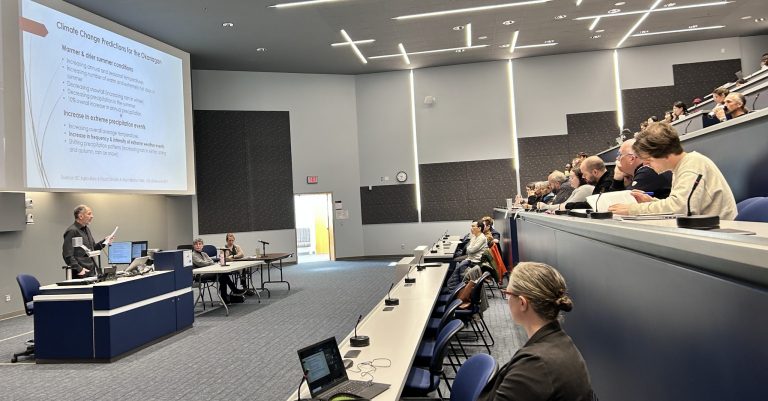
In his comments, Dr. Wagner reflected upon his early research with Dr. Armstrong in the Shingle Creek Watershed and discussed the impact of settler-colonial legal frameworks and the denial of Indigenous water rights as critical to understandings of contemporary water regulation in British Columbia. As an implication of colonial frameworks, Dr. Wagner highlighted how these themes emerge in his recent work on the Columbia River Treaty, which perpetuates an exclusionary and extractive water management approach – to the detriment of Columbia ecologies and communities.
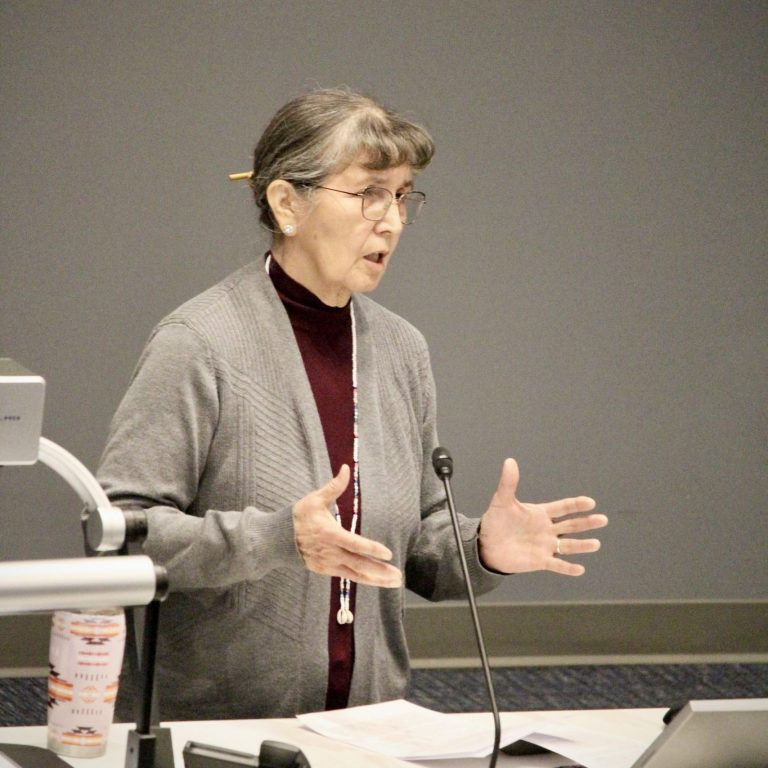
Dr. Armstrong offered reflections on Syilx water governance frameworks, illustrating the deep and reciprocal relationship that Syilx peoples hold with water, and the direct connection between watershed and Syilx community health. Further, she discussed the implications of water and riparian degradation on Syilx culture, sovereignty, and rights and title.

Dr. Armstrong highlighted the need for Syilx leadership in water governance, the importance of collaboration, and the need for emerging structures to recognize Syilx authority and their vital role in watershed decision-making.

Day One programming also included the panels, “Climate, Water and Ecosystem Resilience” and “Watershed Governance and Management in a Changing Climate” which offered multidisciplinary insights into critical linkages between surface water sources, ecosystem services, resilience and sustainability, and increasingly intense weather events as a result of a changing climate. These panels also discussed the essential features of inclusive, collaborative, and adaptive approaches to governance and decision-making.

For detailed summaries on 2025’s Day One sessions, and information on Day Two programming, please visit https://climatesolutions.ubc.ca/news-and-events/launching-climatewater-symposium-exploring-water-justice-through-changing-climate.

The Climate Solutions Research Collective is working on developing programming for the 2025/2026 academic year, and is open to suggestions and feedback for activities. You can connect with the Climate Solutions Research Collective team at: https://climatesolutions.ubc.ca/contact-us.
A new publication by Watershed Ecosystems Project researchers, CORRIE GREAVES, DR. ADAM WEI and DR. LAEL PARROTT

Greaves, C., Wei, X. & Parrott, L. Setting the Limit for Cumulative Effects: a Regional Safe Operating Space for Maintaining Ecological Resilience. Environmental Management. 2025. https://doi.org/10.1007/s00267-025-02122-4

Is our collective footprint undermining the ability of ecosystems to adapt, respond, and thrive? 

In a new paper, “Setting the Limit for Cumulative Effects: a Regional Safe Operating Space for Maintaining Ecological Resilience”, published in a special edition of Environmental Management, Watershed Ecosystems Project researchers address this question by proposing a model for measuring cumulative effects relative to a safe operating space (SOS) grounded in ecological resilience. Corrie Greaves, Dr. Adam Wei, and Dr. Lael Parrott outline practical considerations for implementing this model in cumulative effects assessments based on six attributes of a resilient ecosystem: diversity, connectivity, modularity, memory, openness, and feedbacks.

A regional safe operating space (SOS) for maintaining a resilient ecosystem. Figure inspired by the resilience pillar artwork developed by the Tahoe-Central Sierra Initiative (2020). Figured produced in Biorender.

The regional SOS for each attribute of a resilient ecosystem is delineated by an upper and lower boundary (hashed lines). When the magnitude of cumulative effects pushes ecosystems beyond the boundaries of the regional SOS, society can no longer be confident that further human impacts will not erode the ability of the system to adapt and transform to further disturbance, thereby risking the ecosystem structures, functions, and processes on which society depend. When a system is within its regional SOS for resilience, it may still be able to accommodate and recover from additional human disturbances.

A regional SOS may serve as a powerful tool to understand how our collective footprint may be undermining the ability of ecosystems to adapt and respond to future disturbances. This research proposes a regional SOS for resilience model that could serve as a stepping-stone in a much larger agenda that aims to improve the accessibility of ecological resilience in this important sphere.

Watershed Ecosystems Project Graduate Student and UVIC Centre for Global Studies Visiting Governance Graduate Student Fellow Rheanne Kroschinsky, presents “University Extension as a Bridge for Hydrosocial Communities: Exploring the Rescaling of Water Governance in BC” with Oliver. M. Brandes at the Centre for Global Studies Global Talks series.

In this presentation at the University of Victoria’s Centre for Global Studies on March 17, 2025, Rheanne explored the evolving role of university extension (grounded within the case study of UBC Okanagan) as a catalyst for processes supportive of localized watershed governance. The Watershed Ecosystems Project (WEP)’s interdisciplinary, collaborative research approach to investigating key ecological and social linkages within the sqʷʔa watershed is central to this work.

Illustrating university extension capacities through this case study, the talk explored partnerships among university researchers, Syilx communities, and settlers, and highlighted the university’s role in supporting community development, knowledge-sharing, and institutional innovation aimed at enabling more localized and resilient water governance in BC.

Joining the discussion, Oliver M. Brandes (POLIS Project on Ecological Governance) shared insights from foundational work on watershed governance in BC, including legal and policy reforms underpinning the province’s emerging watershed security agenda.


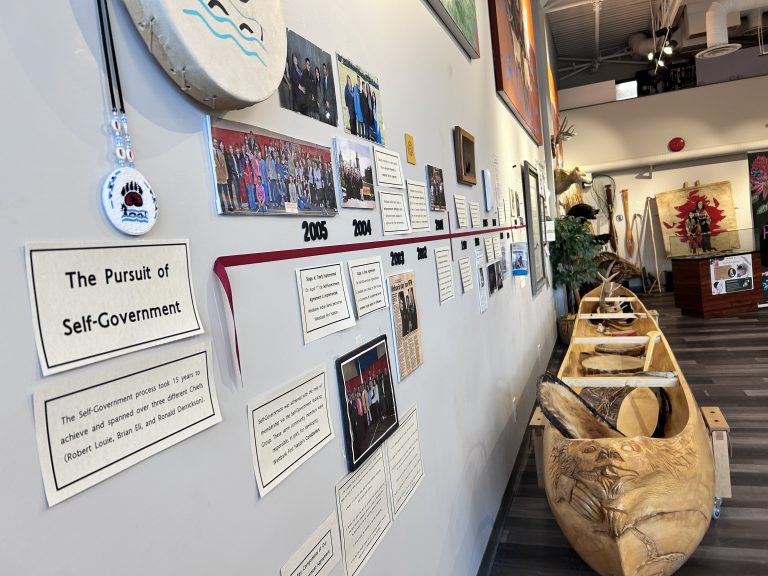
On Thursday, March 13, 2025 researchers from the Watershed Ecosystems Project (WEP) had the opportunity to join members of the Okanagan Basin Water Board Stewardship Council on a guided tour of the Sncəwips Heritage Museum, located in Westbank on the unceded territory of the Syilx people.

Hosted by Syilx knowledge holder and Museum Docent Coralee Miller, the tour offered a powerful exploration of Syilx history, land-based knowledge, and cultural continuity, with particular resonance for those working in water and watershed governance. WEP researchers reflected on the importance of centering Syilx perspectives in watershed science, research, and policy – particularly in relation to water stewardship, reconciliation, and climate resilience.

The visit was part of an ongoing effort to create ethical space and Syilx cultural awareness for WEP researchers, and advance a more respectful and informed approach to watershed ecosystems science in the Okanagan Basin. For WEP researchers, the experience reinforced the vital role of Syilx knowledge keepers and the need for Syilx community leadership in watershed research.

To learn more about Sncəwips museum and the work of Westbank First Nation in cultural revitalization and education, visit www.sncewips.com.

Dr. Jeannette Armstrong, OC, Ph.D., speaks about her research on the recognition of Syilx Governance Rights in the watershed.

Thank you to UBC’s team in the Community Engagement office and Rheanne Kroschinsky for writing and sharing the following article about the Peachland Watershed Community Engagement workshop held in November 2023:

Peachland and the Watershed Ecosystems Project Work Together to Promote Collaborative Watershed Science and Governance

The workshop was supported by the Partnership Recognition and Exploration (PRE) Fund. We are grateful to the Community Engagement office for assistance in facilitating this important aspect of our community engaged research.

The Community Engagement office provides support, services and strategic direction for local community groups, organizations and individuals so they can access resources and engage in mutually beneficial relationships with UBC.

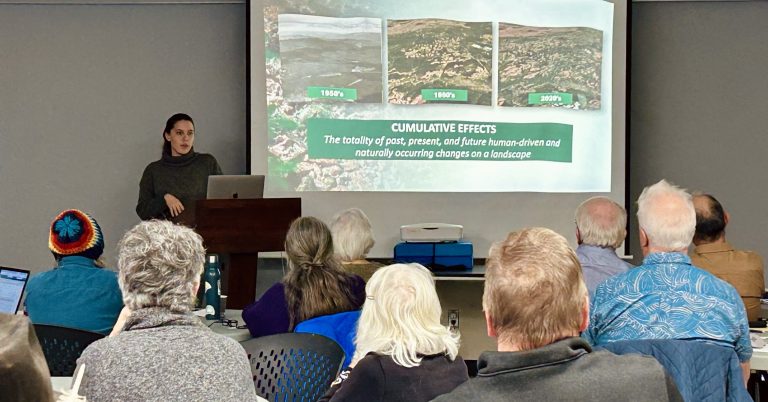
Corrie Allen speaks about her research at the Peachland Community Engagement Workshop.